
For many unhoused people, the hardest part of accepting an overnight stay in a shelter is not being able to bring their dog with them. Shelters that won’t take pets force an impossible choice, and most people choose the dog. Manteca’s Navigation Center just removed that choice.
The Manteca City Council has accepted a donated shipping container — 8 feet by 40 feet, refurbished into an insulated, heated, and air-conditioned kennel with secure indoor and outdoor space for up to 10 dogs — from a Stockton-based company. It’s now installed at the Manteca Navigation Center, 555 Industrial Park Drive, the city’s low-barrier homeless shelter operated by His Way Refuge Center
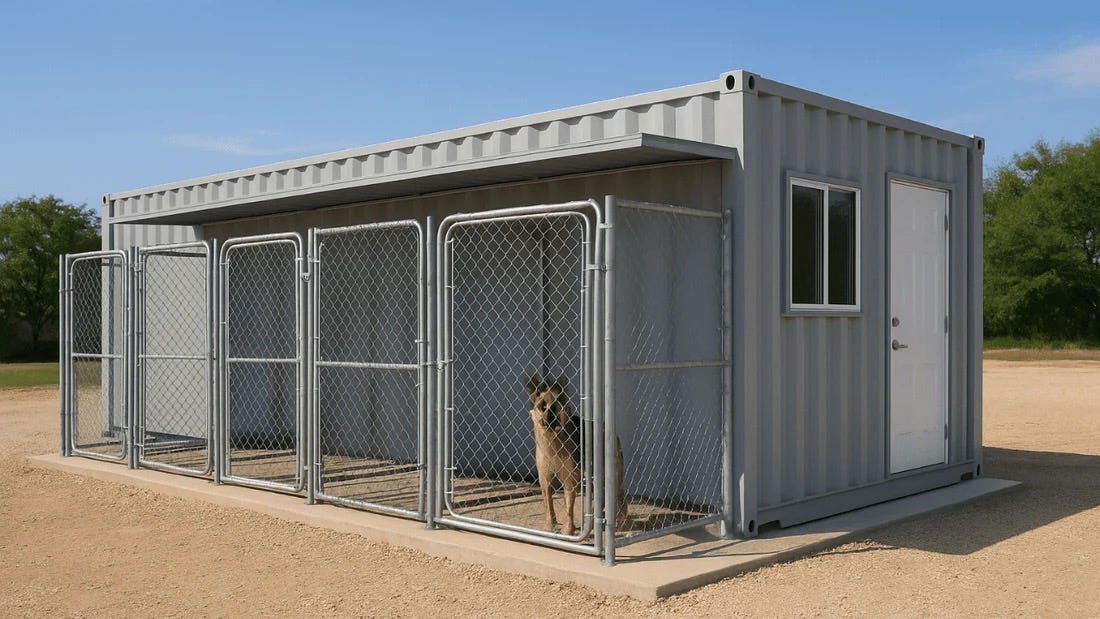
Why it exists
Manteca found that people experiencing homelessness are extremely reluctant to use a shelter if it means giving up their pet. That tracks with what homeless-services research has found more broadly — pet ownership is one of the most commonly cited reasons unsheltered individuals decline a shelter bed. For many, a dog is the one relationship they haven’t lost.
The Navigation Center itself runs on a housing-first, low-barrier model: shelter beds, meals, showers, hygiene supplies, transportation help, case management, and behavioral health support, all aimed at moving people into stable housing rather than just off the street for a night. The city’s own program page now lists “pet wash station and kennel services” among those offerings — a small addition that represents a real shift in how the shelter was designed to work.
🇺🇸 Click here for an automated shipping container quote from USA Containers
How it works
The kennel isn’t a drop-off point. Residents keep their dogs with them during the day and use the secure kennel overnight while they sleep in the shelter. Feeding, bathing, and general care of the animal stays with the owner — this is co-housing for pets, not a boarding service. The Manteca Animal Services Division handles licensing, vaccinations, and low-cost spay/neuter for the dogs staying there, and maintaining those records can help residents down the line if they move into housing that has its own pet requirements.
The bottom line
A single donated container closes a gap that has quietly turned away people who would otherwise have accepted help — and it's the kind of low-cost, easy-to-replicate change other cities could copy without much of a budget fight.