
RAD LAB is a San Diego based architecture firm that designs and builds structures out of repurposed shipping containers, everything from public parks and restaurants to boutique hotels and office pods. Founded in 2008 by three architecture school graduates, the firm has completed container projects in more than 15 U.S. cities and turned a school thesis into one of the most recognized names in container architecture.
Who Is RAD LAB?
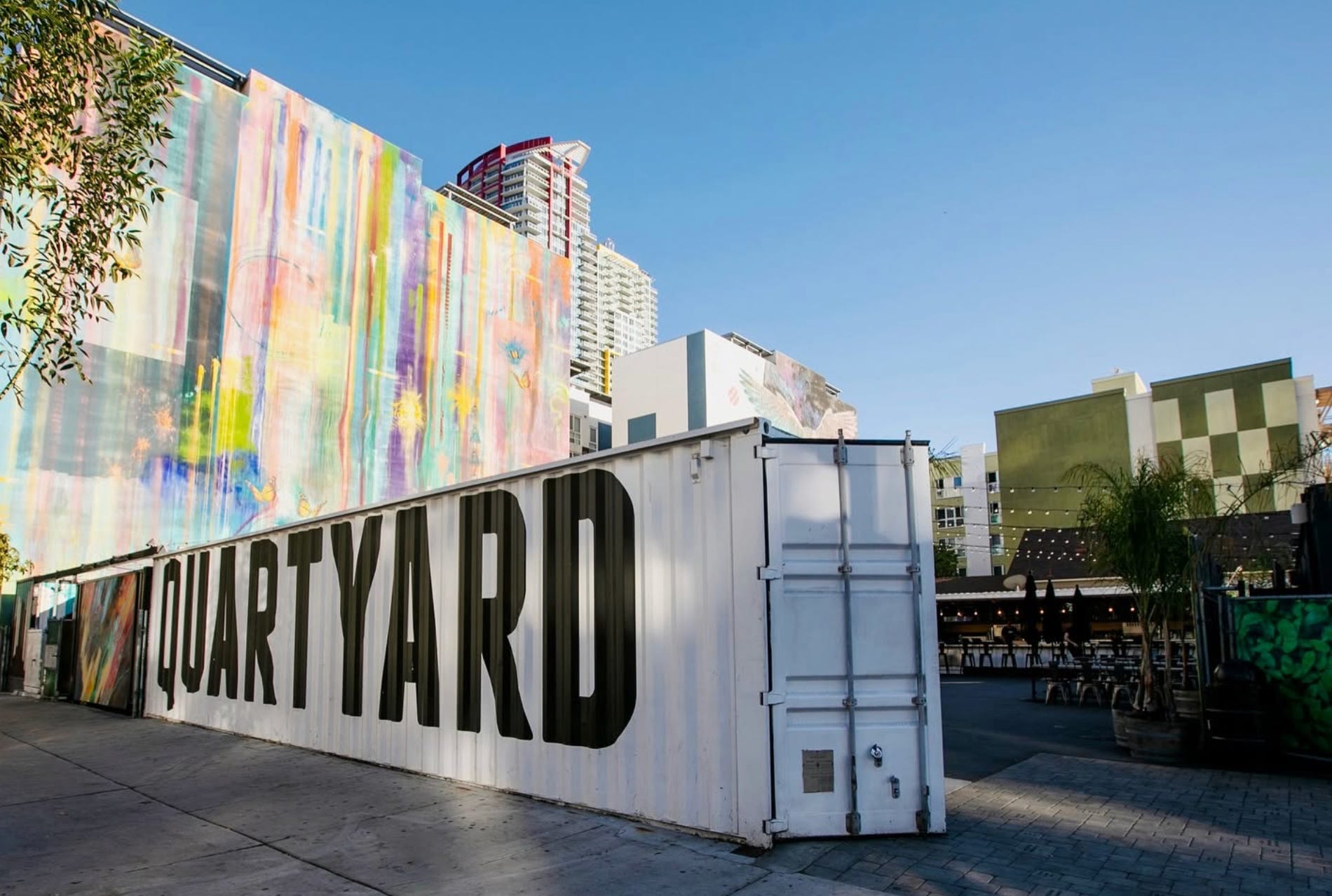
RAD LAB was started by Philip Auchettl, David Loewenstein, and Jason Grauten, all honors graduates of the NewSchool of Architecture + Design. Their senior thesis project wasn't meant to become a business. It became Quartyard, a shipping container park in downtown San Diego that's still running today. That project set the direction for everything RAD LAB has built since: take an unused or overlooked space, drop in modified shipping containers, and turn it into something a neighborhood actually uses.
🇺🇸 Click here for an automated shipping container quote from USA Containers
Quartyard Started as a Class Project and Became a City Landmark
Quartyard opened in 2015 on a vacant, blighted lot in San Diego's East Village. Before RAD LAB got involved, the site had sat empty for years, collecting trash and doing nothing for the surrounding neighborhood. The team raised roughly $60,000 through Kickstarter and built out a coffee shop, a beer garden, a dog park, an event space, and offices, all inside retrofitted shipping containers.
When the lease on the original lot ran out, RAD LAB didn't tear the project down. They relocated it. About 90 percent of the original structures were moved to a new site 500 feet away for Quartyard II, an 11,000 square foot space running on a three year lease. For comparison, standard construction demolition typically reuses around 40 percent of materials. RAD LAB more than doubled that rate just by building with containers in the first place.
Why Containers Made Sense for a Temporary Site
The container format wasn't a style choice. It solved a real problem. Because Quartyard sat on leased land with a limited timeline, RAD LAB needed a building system that could come apart and go back together somewhere else without demolition. Welded container structures don't allow for that, so the firm developed its own turnbuckle and locking systems to join containers mechanically instead. That decision is a big part of why the Quartyard move worked as smoothly as it did, and it's become a signature of how RAD LAB approaches every container project since.
Co-founder David Loewenstein has also pointed to building information modeling as a key part of scaling up from a single container structure to something more complex. The software let the team coordinate between "interior designers, MEP and structural engineers, lighting consultants, HVAC specialists" on the same set of plans, which matters once a project moves past a simple box and starts layering in real building systems.
From Fast Food to a Boutique Hotel
RAD LAB's container work isn't limited to parks. In early 2020, the firm designed Taco Bell's first shipping container restaurant in Shelby Township, Michigan, combining repurposed containers with conventional light frame construction. The result leaned into an industrial look with a black exterior and pop art murals, a distinctly different fast food building than anything the chain had built before.
In Waco, Texas, RAD LAB took on an abandoned, half finished container building and turned it into Hotel Herringbone, a boutique hotel with retail space, restaurants, and a public courtyard. The project picked up a stalled container build and finished it into something the surrounding community actually uses, which is the same pattern the firm started with at Quartyard.
Small Containers, Real Impact
Not every RAD LAB project is a full development. Some are just as useful on a smaller scale. The firm converted a single 40 foot container into two private office spaces, 160 square feet each, complete with separate entrances and a green roof to cut down on interior heat gain. It's a simple example of how one container can solve a very specific space problem without a full construction project.
RAD LAB also worked with the nonprofit Think Dignity to build a Transitional Container Center in San Diego's East Village. Four repurposed containers now hold 304 lockers where people experiencing homelessness can securely store their belongings during the day. That storage lets people job hunt, attend appointments, use public transportation, and work toward stable housing without carrying everything they own with them.
What RAD LAB Proves About Building With Containers
Across parks, restaurants, hotels, offices, and social services, RAD LAB keeps landing on the same result: a shipping container is a legitimate starting point for real architecture, not just a novelty. The firm's projects show what's possible when containers are treated as a serious building material, modular, movable, and reusable at a rate that beats standard construction by a wide margin. Whether the goal is a temporary pop-up or a permanent building, RAD LAB's portfolio is a solid case study in what a stack of steel boxes can become in the right hands.